Advertisements

Why Functional Strength on Natural Terrain Beat My Gym PR
Did you know your body produces about 30% more stabilizer muscle activation on uneven ground compared to a flat gym floor? I didn’t either, until I face-planted on a hiking trail two summers ago! That fall changed how I train forever, and honestly, it’s the reason I’m writing this.
Functional strength training on natural terrain isn’t just some fitness fad. It’s how our bodies were literally built to move. Let me walk you through what I’ve learned, mistakes included.
My Embarrassing Introduction to Terrain Training
So there I was, three years back, thinking I was hot stuff because I could squat 200 pounds in the gym. Then my buddy Mike dragged me on a trail run through some rocky hills near his place. I ate dirt within the first ten minutes.
Turns out, all that gym strength meant nothing when my ankles had to constantly adjust to rocks, roots, and uneven dirt. My stabilizer muscles were basically screaming “who ARE you and why are we doing this.” It was humbling, to say the least.
Advertisements
That day taught me something crucial: strength isn’t just about how much weight you can move in a controlled environment. It’s about how your body responds to chaos. Natural terrain gives you that chaos for free.
What Makes Natural Terrain So Different
Gym floors are flat. Machines guide your movement. Even free weights follow predictable paths. Natural terrain does none of that, and that’s exactly the point.
- Uneven ground forces constant micro-adjustments in your ankles, knees, and hips
- Elevation changes (hills, rocks, logs) work your posterior chain differently than a treadmill incline
- Soft surfaces like sand or mud demand way more effort per step
- Obstacles require reactive strength, not just planned movement patterns
I started incorporating trail hikes with my regular strength routine, and within about six weeks, my balance improved noticeably. Not gonna lie, I was skeptical at first. But my physical therapist confirmed what I was feeling wasn’t just in my head, research from the American Council on Exercise backs up how varied terrain training improves proprioception and injury prevention.
Building Your Own Natural Terrain Routine
You don’t need a mountain range in your backyard to make this work. Trust me, I live near a pretty average park and still manage solid sessions.
Start With What’s Around You
Look for local parks with hills, trails, or even just uneven grass fields. City parks work fine too, don’t overthink this part. My first “terrain workout” was literally just lunges up a grassy hill behind my apartment complex.
Add Load Gradually
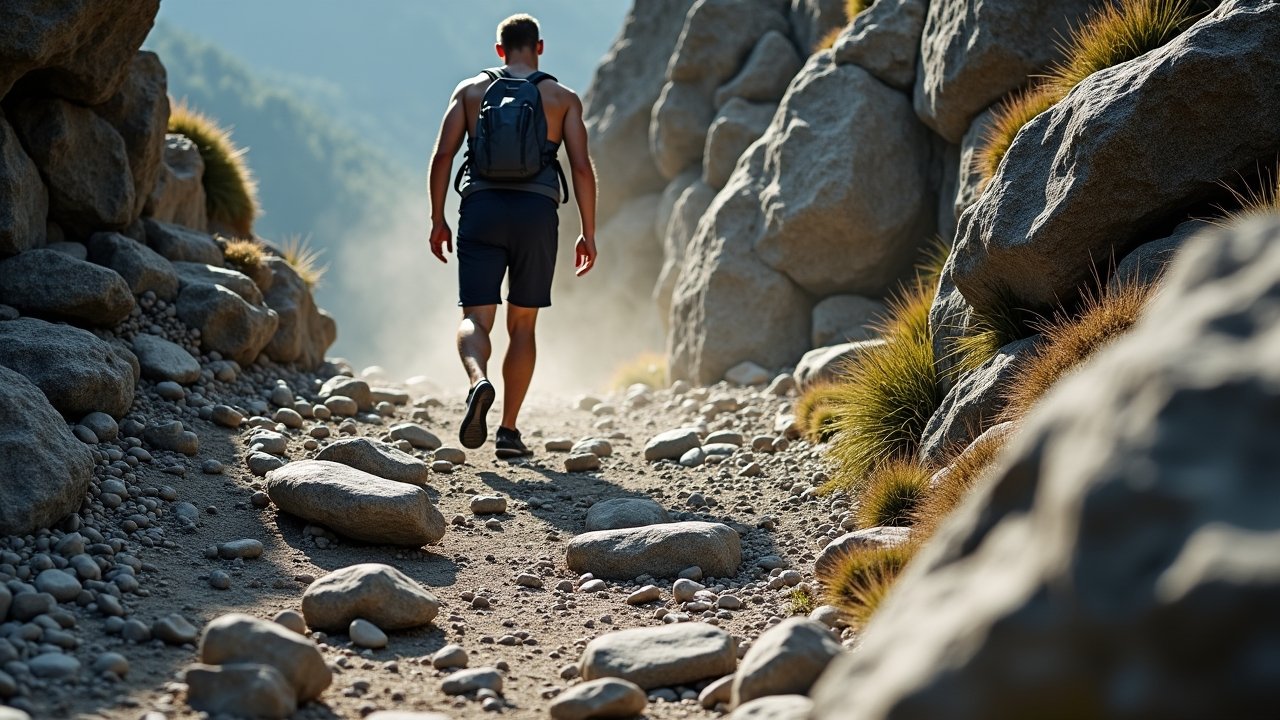
Once bodyweight movements feel manageable, add a weighted vest or backpack with some books in it (yes, I’ve done this, and yes, my neighbors probably thought I was weird). This mimics rucking, which the military has used for decades to build functional strength.
- Bodyweight squats on inclined surfaces
- Lateral bounds across uneven ground
- Carrying loaded packs uphill
- Balance work on logs or rocks (carefully!)
- Trail running with varied pace
One mistake I made early on was going too heavy too fast with the weighted pack. My lower back was NOT happy with me for about a week. Lesson learned: start light, like 10-15 pounds max, and build from there.
The Mental Game Nobody Talks About
Here’s something that surprised me. Training outdoors on unpredictable terrain does something to your brain that a treadmill just can’t replicate. There’s a mental toughness component that develops when you’re navigating actual obstacles instead of staring at a wall in front of a machine.
I noticed I felt more confident, more present, honestly just happier after outdoor sessions. Maybe it’s the fresh air, maybe it’s the novelty, who knows. Studies published through the National Library of Medicine suggest outdoor exercise correlates with improved mood and reduced perceived exertion, meaning workouts feel easier even when they’re objectively harder.
That’s wild when you think about it. Your body works harder on terrain, but your brain thinks it’s working less. Win-win, right?
Safety Stuff You Shouldn’t Skip
Look, I’m not gonna pretend this is risk-free. Uneven terrain means higher injury risk if you’re careless.
- Wear proper trail shoes with good ankle support
- Start slow on unfamiliar trails
- Check weather conditions before heading out
- Bring water, always, even for short sessions
- Tell someone where you’re going if you’re solo
I learned the hard way that flip-flops (don’t ask) are a terrible choice for trail workouts. My toe still has a scar from that particular genius decision.
Making This Sustainable Long-Term
The best part about training on natural terrain? It never gets boring the way gym routines sometimes do. Every trail is different, every season changes the landscape, and honestly, that variety keeps me coming back.
Functional strength built this way transfers directly to real life too. Carrying groceries, playing with kids, catching yourself when you trip, these all get easier when your body has practiced handling instability.
So here’s my challenge to you: find one piece of natural terrain near you this week. A hill, a tr